
What Happens to Gold 72 Hours Before the Headlines Catch Up? The Hidden Signals Smart Investors Watch
July 21, 2026 · GoldPriceNow · 6 min read
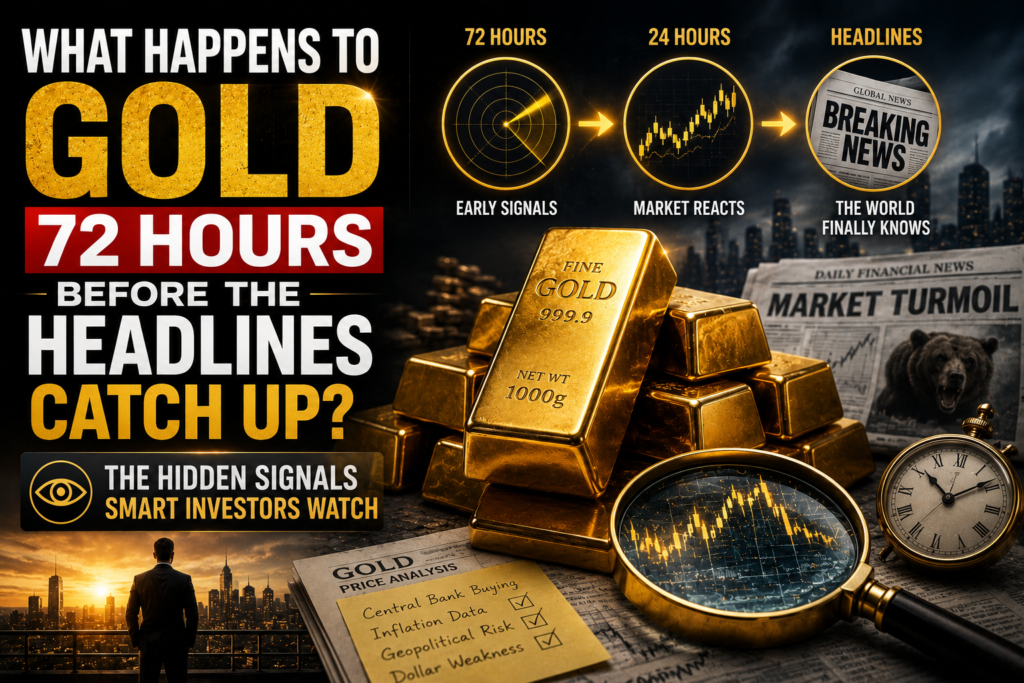
What Happens to Gold 72 Hours Before the Headlines Catch Up? The Hidden Signals Smart Investors Watch
Most investors believe breaking news moves the gold market.
In reality, professional traders often pay close attention to economic data, bond markets, currencies, and market positioning before major headlines dominate news cycles. Gold prices can begin responding to changes in expectations well before a story becomes widely discussed.
This doesn’t mean markets can predict the future. Instead, they constantly process new information—economic reports, central bank comments, energy prices, and investor positioning—as it becomes available.
Understanding these early signals may help investors interpret gold’s movements more effectively.
Why Gold Sometimes Moves Before the News
Financial markets are forward-looking.
Prices often reflect what investors expect might happen rather than reacting only after an event occurs.
Professional investors continuously evaluate:
- Inflation expectations
- Bond yields
- Currency movements
- Central bank communications
- Commodity prices
- Investor positioning
As expectations change, gold prices may adjust—even before a major news headline captures public attention.
The “72-Hour Window”
Think of the period before a major market-moving event as a chain of reactions.
Economic Signals

↓

Institutional Analysis

↓

Market Positioning

↓

Bond & Currency Moves

↓

Gold Price Adjustments

↓

Mainstream Headlines
Markets don’t wait for newspaper headlines. They react as new information is priced in.
Signal #1: Bond Yields Often Move First
One of the first places many professional investors look is the government bond market.
Why?
Bond yields influence:
- Interest-rate expectations
- Real returns
- Opportunity cost of holding gold
If yields fall because investors expect slower growth or easier monetary policy, gold may receive support. If yields rise sharply, gold can face pressure.
Signal #2: The U.S. Dollar Can Shift Expectations
Gold is priced globally in U.S. dollars.
Changes in the dollar often reflect investor expectations about:
- Federal Reserve policy
- Economic growth
- Global capital flows
A weaker dollar can make gold relatively less expensive for international buyers, while a stronger dollar may create headwinds.
Signal #3: Oil Prices Can Influence Inflation Expectations
Energy markets are closely watched because higher oil prices can feed into inflation.
If oil rises significantly:
- Inflation expectations may increase.
- Markets reassess central bank policy.
- Gold demand may strengthen if investors seek inflation protection.
Again, the relationship is not automatic, but it is one of the many inputs markets evaluate.
Signal #4: Central Bank Communication
Markets often react to subtle changes in tone from policymakers.
Investors listen for clues about:
- Inflation
- Employment
- Economic growth
- Future interest rates
Sometimes a single speech or interview can influence expectations well before an official policy announcement.
Signal #5: Gold ETF Flows
Gold ETFs provide insight into investor demand.
Large inflows may indicate increased interest in gold exposure, while outflows can suggest investors are reducing allocations.
ETF flows don’t determine prices by themselves, but they are an important piece of the broader picture.
Signal #6: Futures Positioning
Institutional investors also monitor futures markets to understand positioning.
Changes in positioning can provide context about market sentiment, although they should not be viewed as predictions.
What Professional Investors Watch
| Indicator | Why It Matters for Gold |
|---|---|
| Treasury Yields | Interest-rate expectations |
| U.S. Dollar Index | Currency strength |
| Oil Prices | Inflation expectations |
| Gold ETF Flows | Investor demand |
| Central Bank Statements | Policy outlook |
| Economic Calendar | Market expectations |
These indicators often move before headlines become the dominant market narrative.
A Practical Example
Imagine markets expect weaker-than-forecast employment data.
Before the official release:
- Bond yields begin to decline.
- The U.S. dollar softens.
- Gold edges higher.
- Investors discuss changing rate expectations.
When the employment report is finally published, the headline may appear to explain gold’s move—but part of the adjustment may have already occurred as expectations evolved.
This illustrates why markets are often described as forward-looking.
Why Retail Investors Often Feel “Late”
Many retail investors consume information after it has become widely reported.
Institutional investors, by contrast, often spend more time analyzing:
- Economic calendars
- Market expectations
- Cross-asset relationships
- Portfolio risk
This doesn’t guarantee better outcomes, but it highlights the difference between reacting to headlines and interpreting market signals.
What the Next 72 Hours Could Mean for Gold
Whenever major events approach—such as:
- Inflation reports
- Employment data
- Central bank meetings
- Significant geopolitical developments
Markets begin reassessing probabilities.
Gold’s movement during this period often reflects changing expectations rather than certainty about the eventual outcome.
The Biggest Mistake Investors Make
Many people assume:
Headline → Gold Moves
In reality, the sequence is often more nuanced:
New Information → Expectations Change → Markets Reprice → Headlines Explain the Move
Recognizing this process can help investors better understand why gold sometimes appears to move “before the news.”
Final Analysis
Gold is one of the world’s most closely watched financial assets because it responds to a wide range of economic and geopolitical influences.
The period leading up to major events is often characterized by changing expectations across bond markets, currencies, commodities, and investor positioning. These developments can influence gold prices before the broader public conversation catches up.
Rather than trying to predict headlines, many experienced investors focus on the underlying indicators that shape market expectations. Watching those signals may provide a clearer understanding of why gold moves when it does.
📌 Key Highlights
- ⏳ Gold prices can react to changing market expectations before major headlines dominate the news.
- 📉 Bond yields, the U.S. dollar, and oil prices are among the key indicators investors monitor.
- 🏦 Central bank communications and economic calendars can influence expectations well ahead of official decisions.
- 📊 Gold ETF flows and futures positioning provide additional insight into market sentiment.
- 🌍 Understanding the drivers behind gold’s movement may be more valuable than reacting to headlines alone.
❓FAQs
Does gold always move before the news?
No. Sometimes gold reacts after major announcements, while other times markets adjust in advance as expectations evolve.
Why do bond yields matter for gold?
Bond yields influence the opportunity cost of holding gold and are closely linked to interest-rate expectations.
Can investors predict gold prices using these indicators?
No single indicator can predict gold prices. Investors typically consider multiple factors together rather than relying on one signal.
Why do institutional investors monitor several markets?
Gold is influenced by bonds, currencies, commodities, and monetary policy, so looking across markets provides a broader perspective.
Should retail investors ignore headlines?
Headlines are useful, but combining them with economic data and market indicators can provide a more complete understanding of gold price movements.
About GoldPriceNow
GoldPriceNow delivers trusted coverage of gold prices, silver rates, precious metals news, investment analysis, market trends, and global economic developments. Whether you’re tracking daily gold prices or researching long-term investment strategies, GoldPriceNow provides timely insights to help you make informed financial decisions.
External Authority Sources
Related Articles
 Gold News
U.S. Treasury Doubles Bond Buybacks — Is Gold Getting a New Bullish Signal?
U.S. Treasury Doubles Bond Buybacks — Is Gold Getting a New Bullish Signal? The U.S. Treasury has just delivered a…
 Gold News
Gold Price Today Outlook as US Debt Crosses $40 Trillion and Treasury Yields Surge
Gold Price Today Outlook as US Debt Crosses $40 Trillion and Treasury Yields Surge The gold price today is facing…
 Investment Guides
Gold Price Today Outlook — US Jobs Data Could Decide Whether Gold Breaks Higher or Pulls Back
Gold Price Today Outlook — US Jobs Data Could Decide Whether Gold Breaks Higher or Pulls Back The gold price…