
Gold ETFs vs Physical Gold: Pros, Cons, Returns & Which Investment Could Be Better in 2026?
July 20, 2026 · GoldPriceNow · 6 min read
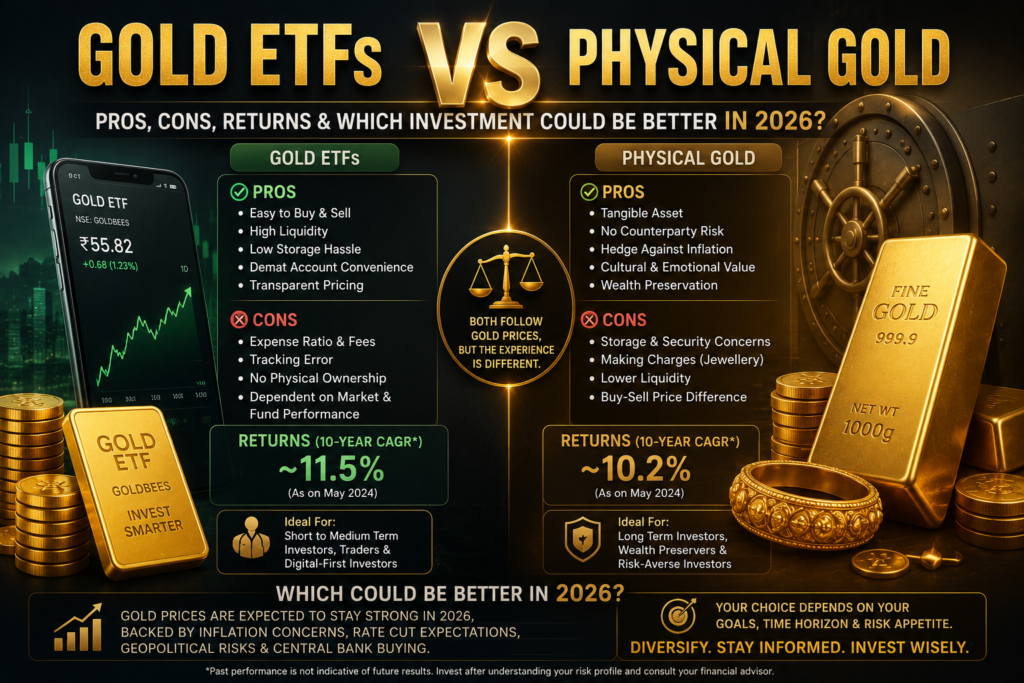
Gold ETFs vs Physical Gold: Pros, Cons, Returns & Which Investment Could Be Better in 2026?
Gold has protected wealth for centuries, but today’s investors have more choices than ever. Instead of buying gold bars or coins, millions now invest through Gold Exchange-Traded Funds (ETFs) that track the metal’s price.
So, which investment is better in 2026—Gold ETFs or Physical Gold?
The answer depends on your goals. If you prioritize convenience and liquidity, ETFs may offer advantages. If you value direct ownership and long-term wealth preservation, physical gold remains attractive. Understanding the trade-offs is key.
Why Gold Still Matters in 2026
Gold continues to attract investors because it often serves as:
- A portfolio diversifier.
- A hedge during periods of economic uncertainty.
- A globally traded asset with deep liquidity.
- A reserve asset held by central banks.
While gold prices fluctuate, many investors use it to reduce overall portfolio risk rather than replace growth investments.
Key Highlights
- 🪙 Gold ETFs allow investors to gain gold exposure without storing bullion.
- 📈 GLD remains the world’s largest gold ETF with over $130 billion in assets.
- 💰 Physical gold provides direct ownership but may involve storage and insurance costs.
- ⚖️ ETFs generally offer higher liquidity, while physical gold appeals to long-term holders.
- 🌍 Both investment types are influenced by inflation, interest rates, central bank buying, and global economic conditions.
Gold ETFs vs Physical Gold: Quick Comparison
| Feature | Gold ETFs | Physical Gold |
|---|---|---|
| Ownership | Shares tracking gold | Direct ownership |
| Storage | None required | Investor responsible |
| Liquidity | Very High | Moderate |
| Trading | Stock exchange | Jeweller/Bullion Dealer |
| Annual Fees | Usually low expense ratio | No management fee, possible storage/insurance costs |
| Security | Brokerage account | Personal vault/bank locker |
| Premiums | Generally low | Dealer premiums may apply |
| Suitable For | Active investors | Long-term holders |
Largest Gold ETFs by Assets (2026)
| ETF | Assets Under Management |
|---|---|
| SPDR Gold Shares (GLD) | $130.8 Billion |
| iShares Gold Trust (IAU) | $60.3 Billion |
| SPDR Gold MiniShares (GLDM) | $27.5 Billion |
| abrdn Physical Gold Shares (SGOL) | $6.75 Billion |
| iShares Gold Trust Micro (IAUM) | $6.36 Billion |
| VanEck Merk Gold ETF (OUNZ) | $2.59 Billion |
| Goldman Sachs Physical Gold ETF (AAAU) | $2.41 Billion |
These figures highlight the scale of investor participation in gold-backed ETFs, with GLD remaining the world’s largest physically backed gold ETF by assets.
Why Gold ETFs Have Become So Popular
Gold ETFs have grown rapidly because they solve many practical challenges associated with owning physical bullion.
Instant Liquidity
Gold ETFs trade throughout market hours like ordinary stocks. Investors can buy or sell quickly without transporting or storing metal.
Lower Entry Cost
Many ETFs allow investors to gain exposure with relatively small investments compared with purchasing bars or coins.
Portfolio Convenience
ETFs integrate easily into brokerage accounts alongside stocks and bonds, making portfolio management simpler.
Benefits of Physical Gold
Despite ETF growth, physical gold continues to appeal to many investors.
Direct Ownership
When you own bullion or coins, you possess the asset directly rather than shares in a fund.
No Counterparty Exposure to a Fund Structure
Physical gold is not dependent on an ETF provider’s operations or brokerage account access.
Long-Term Wealth Preservation
Many families hold physical gold across generations as part of long-term wealth planning.
Cost Comparison
| Expense | Gold ETF | Physical Gold |
|---|---|---|
| Purchase Premium | Low | Usually higher |
| Storage | Included in fund structure through expenses | Paid by owner if using secure storage |
| Insurance | Included at fund level | May be required separately |
| Brokerage Fee | Possible | Usually dealer spread instead |
| Annual Expense | ETF expense ratio | None, but storage costs may apply |
While ETFs have annual management expenses, physical gold owners often face storage, insurance, and dealer premiums.
Risk Comparison
| Risk | ETF | Physical Gold |
|---|---|---|
| Theft | Very Low | Moderate if improperly stored |
| Market Risk | Yes | Yes |
| Liquidity Risk | Low | Moderate |
| Storage Risk | None for investor | Yes |
| Operational Risk | Fund management | Personal custody |
Neither investment is risk-free. Investors should consider how each fits their overall financial plan.
Performance: Do ETFs Track Gold?
Most physically backed gold ETFs are designed to closely follow the spot price of gold, although returns can differ slightly over time because of fund expenses and tracking differences.
Leveraged products, such as double- or triple-exposure ETFs, are intended for short-term trading and can behave very differently from the underlying gold price.
Which Investment Fits Your Goals?
Gold ETFs May Suit Investors Who:
- Prefer online investing.
- Want fast liquidity.
- Already use brokerage accounts.
- Seek efficient portfolio diversification.
Physical Gold May Suit Investors Who:
- Prefer direct ownership.
- Value tangible assets.
- Plan to hold for many years.
- Want assets outside the financial system.
Some investors choose to combine both approaches, using ETFs for liquidity and physical gold for long-term holdings.
Key Factors to Watch in 2026
Gold prices may continue to react to:
- Federal Reserve interest-rate decisions.
- Inflation trends.
- Central bank gold purchases.
- U.S. dollar movements.
- Global geopolitical developments.
- ETF inflows and outflows.
These factors can influence both physical gold and gold ETFs.
Final Verdict
There is no universal winner in the Gold ETFs vs Physical Gold debate.
Gold ETFs offer convenience, liquidity, and accessibility for investors who want efficient exposure to gold prices. Physical gold provides direct ownership and remains a preferred choice for those focused on long-term wealth preservation.
Rather than viewing the two as competitors, many diversified investors use each for different purposes within the same portfolio.
Frequently Asked Questions
Are Gold ETFs backed by real gold?
Many major gold ETFs are designed to hold physical gold bullion to support the value of their shares. Investors should review each fund’s prospectus to understand its structure.
Which is safer: Gold ETF or Physical Gold?
Each has different risks. ETFs reduce storage concerns, while physical gold avoids reliance on a fund structure and requires secure storage.
Do Gold ETFs pay dividends?
Most gold ETFs do not pay dividends because they are designed to track the price of gold rather than generate income.
Can Gold ETFs outperform physical gold?
Traditional physically backed ETFs generally aim to track gold prices closely. Differences in returns are typically due to fees and tracking efficiency. Leveraged ETFs follow different objectives and are not designed for long-term tracking.
Should beginners buy Gold ETFs or physical gold?
The choice depends on personal goals, investment experience, liquidity needs, and preferences regarding direct ownership.
About GoldPriceNow
GoldPriceNow delivers trusted coverage of gold prices, silver rates, precious metals news, investment analysis, market trends, and global economic developments. Whether you’re tracking daily gold prices or researching long-term investment strategies, GoldPriceNow provides timely insights to help you make informed financial decisions.
External Authority Sources
Related Articles
 Investment Guides
Gold Price Today Outlook — US Jobs Data Could Decide Whether Gold Breaks Higher or Pulls Back
Gold Price Today Outlook — US Jobs Data Could Decide Whether Gold Breaks Higher or Pulls Back The gold price…
 Investment Guides
Gold Price Outlook for August 18 — These US Data Releases Could Decide Whether Gold Breaks $4,500 or Pulls Back
Gold Price Outlook for August 18 — These US Data Releases Could Decide Whether Gold Breaks $4,500 or Pulls Back…
 Investment Guides
China Is Buying Gold Again — Is the World’s Biggest Buyer Setting Up Gold’s Next Rally?
China Is Buying Gold Again — Is the World’s Biggest Buyer Setting Up Gold’s Next Rally? Gold Price View: China’s…