
Gold Isn’t Expensive—Your Currency Might Be Losing Value: The Hidden Wealth Shift Most People Miss
July 21, 2026 · GoldPriceNow · 6 min read
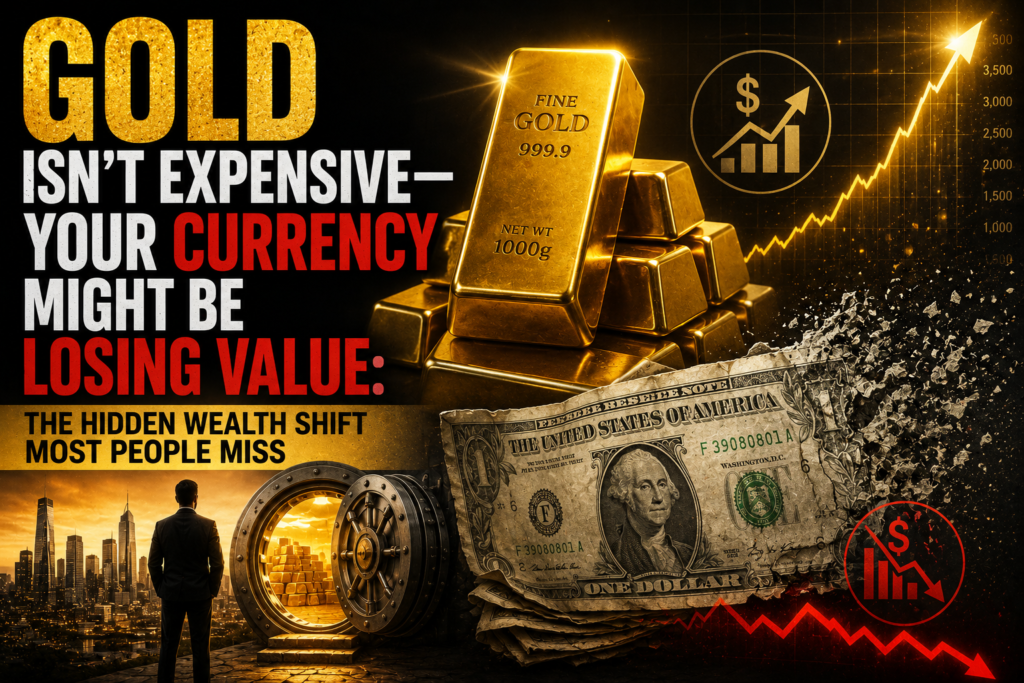
Gold Isn’t Expensive—Your Currency Might Be Losing Value
Every time gold reaches a new record high, headlines proclaim:
“Gold Has Become Too Expensive.”
But what if those headlines are asking the wrong question?
What if gold itself hasn’t changed much at all?
What if the real story is that your currency is gradually buying less every year?
This subtle but powerful shift is often overlooked. While people focus on the rising price of gold, economists and long-term investors frequently ask a different question:
Is gold becoming more expensive, or is money becoming less valuable?
Understanding this distinction could fundamentally change how you think about wealth, inflation, and investing.
Gold Measures Value—Currencies Can Lose It
Gold has been used as a store of value for thousands of years.
Unlike paper currencies, gold cannot be printed by governments or central banks. Its supply grows only gradually through mining.
Fiat currencies, by contrast, can expand significantly when governments and central banks increase the money supply to support economic activity or respond to crises.
As the amount of money in circulation increases faster than the supply of goods and services, purchasing power can decline over time.
This is one reason why the price of gold often rises over long periods.
📌 Key Highlights
- 🥇 Rising gold prices may reflect declining currency purchasing power rather than gold becoming inherently more expensive.
- 💵 Inflation gradually reduces the value of cash over time.
- 🏦 Many central banks continue adding gold to their reserves.
- 🌍 Gold remains a widely recognized store of value during periods of uncertainty.
- 📈 Higher gold prices often coincide with inflation concerns and geopolitical risks.
- 💼 Long-term investors frequently use gold as a diversification tool.
- ⚖️ Understanding purchasing power is just as important as tracking market prices.
Inflation Quietly Reduces Purchasing Power
Inflation doesn’t always arrive dramatically.
Sometimes it happens slowly, making it difficult to notice.
Imagine you had ₹100 in your wallet ten years ago.
Back then it may have bought:
- More groceries
- More fuel
- More electricity
- More restaurant meals
Today, that same ₹100 buys noticeably less.
The currency hasn’t changed physically.
Its purchasing power has.
Gold often reflects this long-term decline because it tends to preserve value over extended periods.
Why Gold Prices Keep Making New Highs
Many people assume rising gold prices mean gold is entering a bubble.
In reality, several factors influence gold prices:
1. Inflation Expectations
When investors expect prices to rise, demand for gold often increases as a potential hedge.
2. Currency Weakness
If a currency loses purchasing power, more units of that currency may be required to buy the same ounce of gold.
3. Central Bank Buying
Many central banks have increased their gold reserves in recent years as part of reserve diversification strategies.
4. Geopolitical Uncertainty
Periods of geopolitical tension often increase demand for traditional safe-haven assets.
5. Interest Rate Expectations
Changes in real interest rates can influence the relative attractiveness of gold compared with interest-bearing assets.
The Hidden Wealth Transfer
One of the least discussed economic realities is how inflation affects savers.
If inflation averages 5% annually, money held without earning a comparable return gradually loses purchasing power.
This doesn’t happen overnight.
Instead, it occurs steadily over many years.
For example:
- Goods become more expensive.
- Housing costs rise.
- Healthcare expenses increase.
- Education costs climb.
Meanwhile, the amount of currency held remains the same unless it grows through investment or interest.
Why Billionaires Continue Buying Gold
Many institutional investors and wealthy individuals view gold differently from short-term traders.
Rather than expecting rapid price gains, they often use gold as a form of portfolio diversification.
Reasons include:
- Potential protection during periods of market stress.
- Diversification away from financial assets.
- A long history as a store of value.
- Protection against unexpected inflation.
- Confidence during periods of geopolitical uncertainty.
Gold is often considered part of a broader risk-management strategy rather than a standalone growth investment.
Gold vs Cash: Which Holds Value Better?
Cash offers liquidity and stability for day-to-day needs.
However, during prolonged periods of inflation, cash purchasing power may decline.
Gold, on the other hand:
- Cannot be created electronically.
- Has limited global supply.
- Has maintained value across many economic cycles.
- Is widely recognized internationally.
This is why some investors allocate a portion of their portfolios to precious metals alongside stocks, bonds, and cash.
Why Central Banks Are Increasing Gold Holdings
Around the world, many central banks have added gold to their reserves.
Common reasons include:
- Diversifying reserve assets.
- Reducing concentration risk.
- Increasing financial resilience.
- Strengthening confidence in national reserves.
Gold continues to play a role in reserve management even within modern financial systems.
What This Means for Everyday Investors
The key lesson is not that everyone should rush to buy gold.
Instead, it is important to understand what rising gold prices may be signaling.
When gold reaches new highs, it can reflect:
- Inflation concerns.
- Currency depreciation.
- Economic uncertainty.
- Increased demand for safe-haven assets.
- Changes in global monetary conditions.
Looking only at the price of gold may miss the broader economic context.
Is Gold Really Expensive?
This depends on the perspective.
If your currency has lost purchasing power over many years, higher gold prices may simply reflect that decline.
From this viewpoint:
Gold may not be becoming dramatically more valuable.
Instead, each unit of currency may be purchasing less gold than before.
That distinction is central to understanding long-term wealth preservation.
Conclusion
Gold Isn’t Expensive—Your Currency Might Be Losing Value challenges a common assumption about rising gold prices.
Rather than viewing gold solely as an expensive asset, it may be more useful to consider what higher prices reveal about inflation, purchasing power, and the long-term value of money.
For investors, the broader takeaway is to focus not only on asset prices but also on preserving purchasing power over time through thoughtful diversification and disciplined financial planning.
Frequently Asked Questions
Why does gold become more expensive during inflation?
Gold often rises because investors seek assets that may help preserve purchasing power when inflation increases.
Does a rising gold price always mean economic trouble?
Not necessarily. Gold prices respond to many factors, including inflation expectations, interest rates, central bank demand, and geopolitical developments.
Why do central banks own gold?
Central banks use gold to diversify reserves and strengthen long-term financial resilience.
Should everyone invest in gold?
Gold can play a role in a diversified portfolio, but the appropriate allocation depends on an individual’s financial goals, time horizon, and risk tolerance.
Related Articles
 Gold News
U.S. Treasury Doubles Bond Buybacks — Is Gold Getting a New Bullish Signal?
U.S. Treasury Doubles Bond Buybacks — Is Gold Getting a New Bullish Signal? The U.S. Treasury has just delivered a…
 Gold News
Gold Price Today Outlook as US Debt Crosses $40 Trillion and Treasury Yields Surge
Gold Price Today Outlook as US Debt Crosses $40 Trillion and Treasury Yields Surge The gold price today is facing…
 Investment Guides
Gold Price Today Outlook — US Jobs Data Could Decide Whether Gold Breaks Higher or Pulls Back
Gold Price Today Outlook — US Jobs Data Could Decide Whether Gold Breaks Higher or Pulls Back The gold price…