
U.S. Treasury Doubles Bond Buybacks — Is Gold Getting a New Bullish Signal?
August 20, 2026 · GoldPriceNow · 11 min read
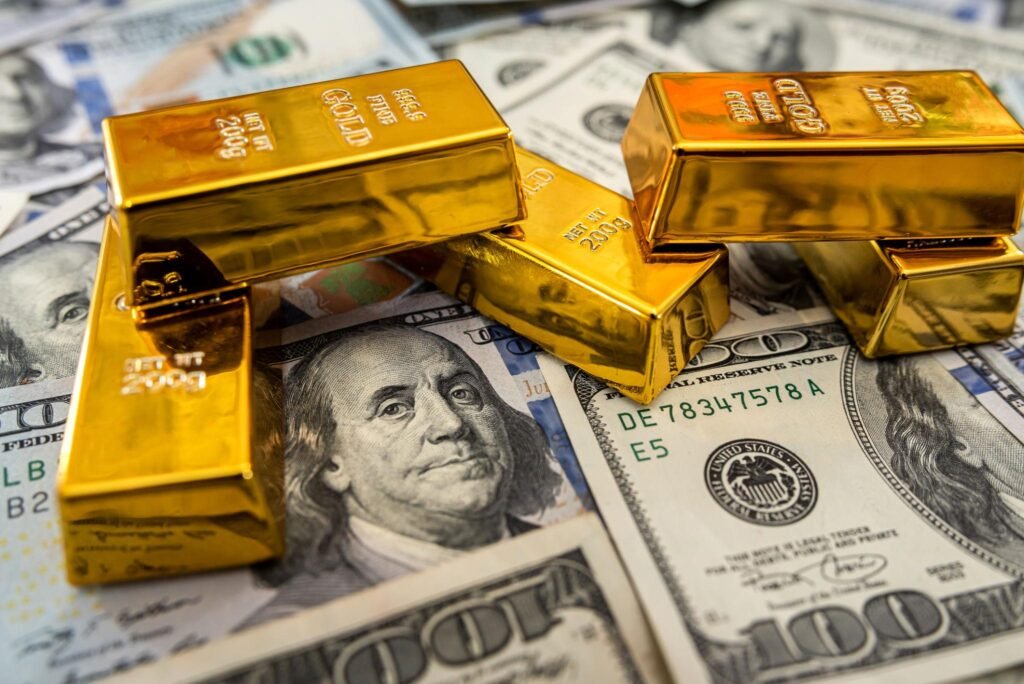
U.S. Treasury Doubles Bond Buybacks — Is Gold Getting a New Bullish Signal?
The U.S. Treasury has just delivered a major signal to financial markets: it is doubling the size of selected long-term Treasury bond buybacks to at least $4 billion per operation, up from $2 billion. The move comes after the U.S. 30-year Treasury yield climbed to around 5.34%, its highest level since 2007.
For gold investors, this matters because the bond market, U.S. dollar and real yields are among the most important drivers of gold price today.
And the market reaction was immediate.
Gold surged above $4,500 per ounce, while the dollar weakened and long-term Treasury yields initially dropped. Reuters reported that gold jumped sharply after the Treasury announcement, although the metal subsequently pulled back as traders took profits and fresh inflation concerns returned.
So the bigger question now is:
Is the Treasury’s intervention creating the next major leg higher for gold — or is this rally already running too hot?
🔑 Key Highlights
- Gold pushed above $4,500 per ounce following the Treasury buyback announcement.
- Treasury plans to increase certain long-duration buybacks from $2 billion to at least $4 billion per operation.
- The program targets Treasury securities in the 10–20 year and 20–30 year sectors.
- The announcement initially pushed long-term Treasury yields lower and weakened the U.S. dollar.
- The U.S. national debt has crossed $40 trillion, adding a powerful fiscal-risk narrative around gold.
- The Treasury buyback is not the same thing as Federal Reserve quantitative easing.
- Gold’s next major test is whether it can sustain levels around $4,500–$4,550.
- Higher oil prices and hawkish Fed signals remain important risks to the gold rally.
Why the Treasury Buyback Matters for Gold
At first glance, a Treasury bond buyback might seem unrelated to the live gold price.
It isn’t.
The connection runs through Treasury yields and the U.S. dollar.
When Treasury yields rise sharply, investors have a stronger incentive to hold interest-bearing government securities instead of an asset such as gold, which does not pay interest.
But when yields decline, that opportunity cost falls.
That is exactly what happened after the Treasury announcement.
The 30-year Treasury yield had reached roughly 5.34% before easing after the buyback announcement. Reuters reported that the move temporarily reduced pressure in the long-end bond market.
Gold responded almost immediately.
Gold Price Today: Why $4,500 Is the Number Everyone Is Watching
Gold has entered a much more important technical zone.
Spot gold climbed above $4,500 per ounce, reaching roughly $4,525 in early trading before retreating toward the $4,490 area.
That means $4,500 has transformed from a psychological barrier into a key battleground.
Bullish scenario
If gold can establish a sustained move above $4,500 and subsequently defend that level, traders could begin looking toward the recent highs and potentially higher psychological levels.
Bearish scenario
If the metal repeatedly fails around $4,500–$4,550, profit-taking could push prices back toward lower support zones.
One current market analysis identifies approximately $4,510–$4,515 as an important short-term resistance area, highlighting the possibility of consolidation if gold cannot maintain the breakout.
The important distinction: touching $4,500 is not the same as establishing a durable breakout above it.
Why $40 Trillion U.S. Debt Is Adding to Gold’s Appeal
The Treasury announcement comes at an unusually sensitive time.
U.S. gross national debt has now crossed $40 trillion, according to reports citing Treasury data.
That creates a second story underneath the bond-market story.
The immediate question isn’t whether $40 trillion automatically means gold must rise.
Instead, investors are asking whether increasingly large government debt levels could eventually require:
- higher borrowing costs,
- greater refinancing requirements,
- persistent fiscal deficits,
- higher inflation expectations,
- or policies designed to prevent long-term yields from rising too far.
Those concerns can increase demand for assets viewed as outside the traditional government-debt system.
That is one reason gold remains strategically important for institutional and central-bank investors.
Treasury Buybacks Are Not QE — But Gold Traders Still Care
This distinction is important.
The Treasury is not the Federal Reserve.
The Treasury’s buyback operation is primarily a debt-management and liquidity-support mechanism. The current increase applies to longer-dated nominal coupon securities and is scheduled to take effect from September 9 through November 4.
It does not mean the Fed has launched a new quantitative-easing program.
However, markets can still react strongly because the policy influences the supply-demand dynamics of Treasury securities.
The signal is arguably just as important as the mechanical size of the purchases:
U.S. policymakers are paying close attention to the rapid rise in long-term borrowing costs.
That signal matters for gold.
The Dollar Is the Other Half of the Gold Story
Gold is primarily priced internationally in U.S. dollars.
Therefore, movements in the dollar can significantly influence the gold price today.
After the Treasury announcement, the dollar weakened while Treasury yields fell, creating a particularly favorable environment for gold. Reuters reported that both the dollar and long-dated yields fell as gold surged.
But this tailwind isn’t guaranteed to continue.
The latest Federal Reserve minutes introduced another complication.
Fed officials remained concerned about inflation, while markets continued to assess the possibility of a restrictive monetary-policy stance. Rising oil prices are also creating renewed inflation concerns.
That creates a tug-of-war:
Lower yields + weaker dollar → bullish gold
versus
Higher inflation + hawkish Fed → potentially bearish gold
U.S. Gold Price: What It Means for American Buyers
For U.S. consumers searching for USA gold price, gold price today USA, or live gold price USA, the international spot price is the starting point.
However, the price paid for physical gold is not necessarily identical to the spot market.
A retail gold bar or coin can include:
- dealer premium,
- manufacturing costs,
- distribution costs,
- shipping,
- payment fees,
- and applicable taxes.
Therefore, someone searching for the gold price per gram in the USA should distinguish between the international spot price and the final retail purchase price.
Gold Price Across U.S. States
There is not a separate global spot-gold price for every U.S. state.
The underlying spot price is essentially the same nationwide, while the final retail price can differ depending on dealer premiums, taxes, product type and local market conditions.
Indicative U.S. gold-price reference
| State/Region | Gold price reference |
|---|---|
| California | Based on prevailing U.S. spot gold + local dealer premium |
| Texas | Based on prevailing U.S. spot gold + local dealer premium |
| New York | Based on prevailing U.S. spot gold + local dealer premium |
| Florida | Based on prevailing U.S. spot gold + local dealer premium |
| Illinois | Based on prevailing U.S. spot gold + local dealer premium |
| Pennsylvania | Based on prevailing U.S. spot gold + local dealer premium |
| Ohio | Based on prevailing U.S. spot gold + local dealer premium |
| Georgia | Based on prevailing U.S. spot gold + local dealer premium |
| North Carolina | Based on prevailing U.S. spot gold + local dealer premium |
| Michigan | Based on prevailing U.S. spot gold + local dealer premium |
| New Jersey | Based on prevailing U.S. spot gold + local dealer premium |
| Virginia | Based on prevailing U.S. spot gold + local dealer premium |
| Washington | Based on prevailing U.S. spot gold + local dealer premium |
| Massachusetts | Based on prevailing U.S. spot gold + local dealer premium |
| Arizona | Based on prevailing U.S. spot gold + local dealer premium |
Important: These are not claims of different state spot prices. They are regional references. A physical gold buyer should check the exact dealer quote before purchasing.
What Could Push Gold Higher From Here?
1. Falling Treasury yields
If the Treasury intervention succeeds in keeping long-term yields under control, gold could benefit from a lower opportunity cost.
2. A weaker U.S. dollar
Further dollar weakness could make dollar-denominated gold more attractive to international investors.
3. Fiscal concerns
The $40 trillion U.S. debt milestone keeps questions about long-term fiscal sustainability in the spotlight.
4. Central-bank demand
Structural central-bank demand remains one of the longer-term pillars supporting the gold market.
5. Geopolitical risk
The ongoing Middle East situation and energy-market uncertainty continue to create demand for defensive assets.
What Could Trigger a Gold Price Correction?
Gold’s rally isn’t risk-free.
Hawkish Federal Reserve
If inflation remains stubborn and the Fed signals that rates need to stay higher for longer, gold could face pressure.
Rising oil prices
Higher energy prices can feed inflation expectations and potentially push bond yields higher. Reuters highlighted rising oil prices as one reason gold retreated after its initial surge.
Profit-taking
A move of several percentage points in a single session naturally increases the risk of short-term profit-taking.
Treasury yields rebound
If the Treasury buyback fails to create lasting demand for long-duration bonds, yields could climb again.
That would create a significant headwind for gold.
Gold Price Outlook: Bullish, But Expect Volatility
The current setup is unusually complicated.
The long-term gold story remains constructive, but the short-term market is vulnerable to violent reversals.
The bullish chain is straightforward:
Treasury buybacks → lower long-term yields → weaker dollar → lower opportunity cost of gold → stronger gold demand.
But there is another chain:
Higher oil → inflation concerns → hawkish Fed → higher yields → stronger dollar → pressure on gold.
That means gold could remain highly sensitive to every major U.S. economic release, Federal Reserve communication and Treasury-market move.
For traders, $4,500 is therefore more than a round number.
It is the level that can help determine whether the latest surge becomes a sustained breakout or another sharp rejection.
What Gold Investors Should Watch Next
The most important indicators are:
- Gold’s ability to hold above $4,500
- U.S. 10-year Treasury yield
- U.S. 30-year Treasury yield
- U.S. Dollar Index
- Federal Reserve rate expectations
- U.S. inflation data
- Oil prices
- Central-bank gold purchases
- Gold ETF flows
- Treasury buyback operations beginning September 9
The combination of these signals is more useful than watching gold alone.
Gold Price Today: The Bigger Picture
The latest Treasury move does not solve America’s fiscal problems.
The buyback program is relatively small compared with the enormous size of the Treasury market. Reuters noted that the $4 billion-per-operation size is tiny compared with roughly $32.2 trillion of Treasury debt.
But markets don’t always trade the absolute size of a policy.
They trade the signal.
And the signal is clear: policymakers are increasingly focused on the consequences of rising long-term borrowing costs.
That is precisely the type of environment in which investors tend to reconsider the role of assets such as gold.
For GoldPriceNow, the takeaway is simple:
Gold’s move above $4,500 is important, but the real test is whether yields, the dollar and fiscal-risk expectations continue to support the breakout.
The next few sessions could determine whether $4,500 becomes a new floor — or the top of another short-term gold rally.
📌 Key Highlights for GoldPriceNow
- Live gold price: Gold has moved above the $4,500/oz region.
- Gold price today: Volatility remains exceptionally high.
- USA gold price: U.S. spot gold remains driven by global XAU/USD pricing.
- Treasury signal: Long-term bond buybacks doubled to at least $4 billion per operation.
- Debt signal: U.S. national debt has crossed $40 trillion.
- Bullish trigger: Falling yields + weaker dollar.
- Bearish trigger: Higher inflation + hawkish Fed + rising yields.
- Key technical zone: $4,500–$4,550.
- Risk: Profit-taking after the sharp rally.
- Investor takeaway: Watch Treasury yields and the dollar alongside gold.
Frequently Asked Questions
What is the gold price today?
Gold has recently traded around and above the $4,500-per-ounce level, although prices are moving rapidly and can change throughout the trading session.
Why did gold rise after the Treasury doubled bond buybacks?
The announcement initially pushed long-term Treasury yields lower and weakened the dollar. Both developments can improve the relative attractiveness of non-yielding gold.
Does Treasury bond buying mean the Fed is printing money?
No. Treasury buybacks are a debt-management operation and should not automatically be described as Federal Reserve quantitative easing.
Is $4,500 a major gold price level?
Yes. After gold moved above $4,500, that level became an important psychological and technical reference point for traders.
Could gold fall despite the Treasury buyback?
Yes. Higher oil prices, persistent inflation, hawkish Federal Reserve policy, a stronger dollar or profit-taking could pressure gold.
Is the $40 trillion U.S. debt level bullish for gold?
It can contribute to the long-term investment case for gold by increasing concerns about fiscal sustainability and future borrowing costs, although debt alone does not guarantee higher gold prices.
Is the gold price the same in every U.S. state?
The underlying spot price is broadly the same, but physical gold can sell at different prices because dealer premiums, taxes and other costs vary.
🔗 Key Resources
- Reuters — Treasury doubles long-bond buybacks
- Reuters — Gold reacts to lower yields and Treasury intervention
- Reuters — Bond-market reaction to Treasury buybacks
- Investopedia — How Treasury buybacks work
- MarketWatch — Gold breaks above $4,500
- Saxo — Treasury intervention and the gold outlook
- GoldPriceNow.in — Live gold prices and market tools
- The Business Now
Related Articles
 Gold News
Gold Price Today Outlook as US Debt Crosses $40 Trillion and Treasury Yields Surge
Gold Price Today Outlook as US Debt Crosses $40 Trillion and Treasury Yields Surge The gold price today is facing…
 Investment Guides
Gold Price Today Outlook — US Jobs Data Could Decide Whether Gold Breaks Higher or Pulls Back
Gold Price Today Outlook — US Jobs Data Could Decide Whether Gold Breaks Higher or Pulls Back The gold price…
 Gold News
Gold Price Today in USA Hits $145.50 Per Gram — Is the Next Move Toward $4,500?
Gold Price Today in USA Hits $145.50 Per Gram — Is the Next Move Toward $4,500? Gold Price Today: Gold…